+86 159 8678 2622(WhatsApp)

 Project
Leave Your Message
Picking out a Clear Plastic Dome Tent manufacturer isn't just about staring at pretty pictures. Honestly, a transparent roof sounds awesome—imagine stargazing, seeing the trees, watching the weather change—but it also means you might see the flaws too. For example, weak seams, poor airflow, or hot spots inside that make it uncomfortable.
So, in this review, we’re diving into the Top 10 Clear Plastic Dome Tent Makers around the globe. We’re looking at stuff like the quality of materials, how sturdy the frame is, waterproof capabilities, thermal control, ease of setup, options for customization, and what kind of support they offer after you buy. We’ll also see if they provide solid technical details, realistic info about delivery times, and clear warranty terms. Companies like BubbleTree and Pacific Domes show different ways of designing and building these structures, plus their approaches toward outdoor hospitality.
Now, just to be clear—this isn’t about hype or just pushing products. A lower price tag might hide a complicated, tricky assembly process. A fancy-looking picture doesn’t always mean it performs well in real life. Plus, some company data can be tough to verify, and that’s worth keeping in mind.
Remember R. Buckminster Fuller? The American architect and geodesic dome pioneer once said, “When I am working on a problem, I never think about beauty. I think only how to solve the problem.” His words still hit home. Basically, a dome should do its job—meeting real needs—before it’s all about making a pretty view.
Details really matter here.
So, we’re going beyond marketing speak. We’re checking out things like usable floor space, door design, how it handles snow and wind, ventilation options, UV protection, and how easy it is to access replacement parts. We’re also asking whether manufacturers really understand the climate of different regions and if they pay attention to guest comfort. No review is perfect, but being thorough helps buyers tell a reliable, well-built dome from a pretty but disappointing one once it’s set up.
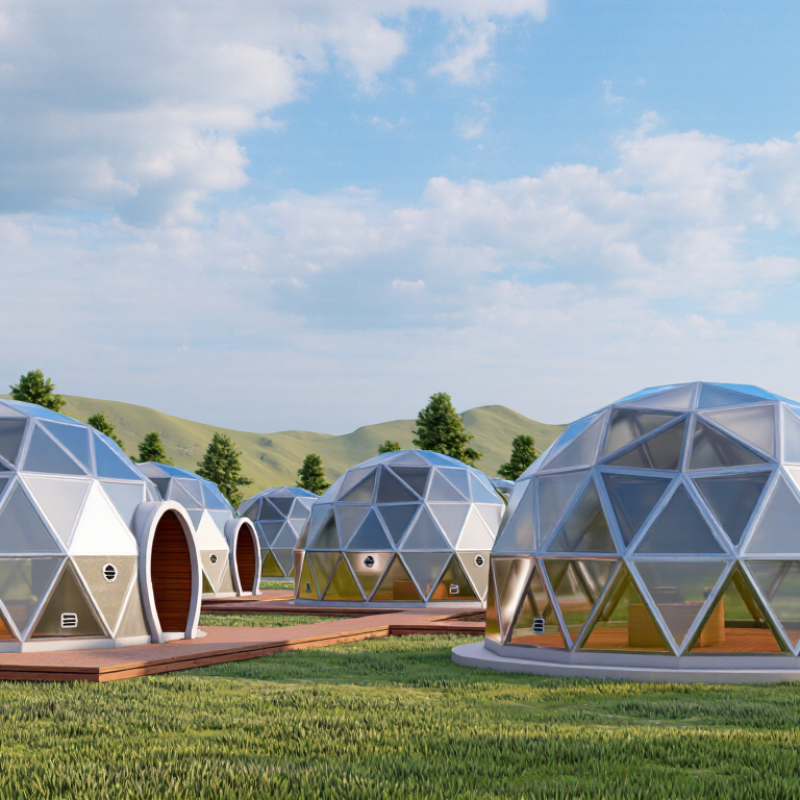
Clear-dome tent manufacturers are companies that design, engineer, and produce transparent shelter systems. Their products may include inflatable domes, framed units, and modular lodging structures. A Clear Plastic Bubble Tent is one recognizable category. Manufacturers often control material selection, seam design, ventilation, and packaging. They may outsource some components. That detail matters.
The global market includes factories, contract producers, engineering firms, and specialized outdoor shelter workshops. It covers hospitality, events, private recreation, and temporary accommodation. Market assessment should examine production capacity, export experience, installation support, and after-sales response. Technical reviews should verify film thickness, UV resistance, flame performance, anchoring, pressure stability, and drainage. Claims need test records, not attractive photographs. Customer feedback can reveal condensation, zipper fatigue, and noisy blowers.
Demand differs by climate and use. Cold regions require insulation layers and snow-load planning. Hot areas need shade systems and cross-ventilation. Coastal projects need corrosion-resistant fittings and stronger anchoring. Manufacturers serving multiple countries must manage customs documents, replacement parts, and local building requirements. Prices alone can mislead. A low quote may exclude foundations, transport, or site labor. No ranking is perfectly neutral; production volume is easier to measure than durability. I would compare specifications with installed examples, while admitting that long-term field data remains limited.
This comparison maps ten common manufacturer and product specializations in the clear-dome tent sector. It describes market segments and construction options rather than ranking named companies.
| No. | Manufacturer specialization | Typical clear enclosure material | Common structure or format | Typical applications | Global market scope |
|---|---|---|---|---|---|
| 1 | Inflatable transparent dome systems | Flexible transparent PVC film or TPU film | Air-supported enclosure maintained by a blower; may include an airlock entrance | Temporary events, exhibitions, seasonal attractions, and short-term installations | Project-based demand across regions; shipping volume, installation support, and local safety requirements affect supply. |
| 2 | Geodesic dome tent fabricators | Clear PVC or TPU panels combined with opaque fabric panels | Triangulated frame assembled from interconnected struts and covered with fitted panels | Glamping, event venues, visitor facilities, and outdoor hospitality | Sold internationally for temporary and semi-permanent use; frame engineering and weather ratings vary by product. |
| 3 | Clear-roof event-structure manufacturers | Transparent PVC roof membrane, sometimes paired with clear sidewalls | Frame-supported tent or modular event structure with a curved or segmented roof | Weddings, corporate events, dining areas, and temporary public gatherings | Demand is linked to event activity and rental markets; products may be manufactured in one country and deployed in another. |
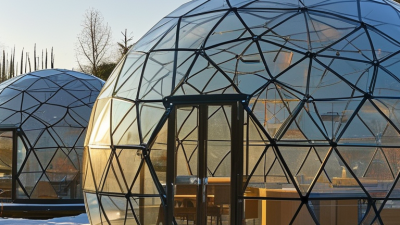
| 4 | Rigid-panel dome and conservatory builders | Polycarbonate panels or acrylic glazing | Rigid framed enclosure; panel shape and frame design depend on the system | Visitor centers, conservatories, garden structures, and longer-term installations | Typically requires more specialized transport and installation than flexible tent coverings; local building rules can apply. |
| 5 | Glamping dome manufacturers | Clear PVC or TPU windows integrated into an opaque weather-resistant cover | Frame-supported dome with a partial transparent section, ventilation, and an entrance | Glamping resorts, campsites, and nature-based accommodation | Serves hospitality projects worldwide, with specifications shaped by climate, maintenance needs, and operator requirements. |
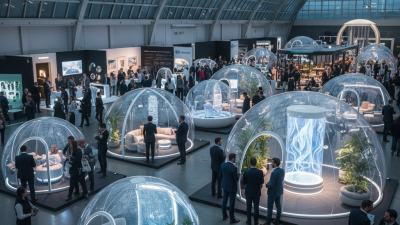
| 6 | Transparent event-dome specialists | Clear flexible film, often used with opaque or printed sections | Enclosed dome designed around a defined event footprint and access plan | Brand activations, temporary showcases, seasonal events, and pop-up spaces | Often supplied through custom orders or event contractors; installation logistics are a significant part of delivery. |
| 7 | Small retail and hospitality dome producers | Clear PVC film or rigid transparent panels, depending on size and design | Compact modular dome or pod, sometimes with a framed door and floor platform | Outdoor dining, small kiosks, ticketing, and sheltered customer areas | Used in both permanent and temporary settings; requirements for fire performance, accessibility, and permits are location-dependent. |
| 8 | Portable observation and viewing-dome makers | Clear flexible film or transparent rigid panels | Enclosed viewing shelter with a wide field of visibility and controlled entry | Tourism, wildlife viewing, educational activities, and outdoor attractions | Purchases are commonly project-specific; exposure to wind, snow, UV, and temperature informs material selection. |
| 9 | Custom architectural membrane fabricators | Engineered transparent or translucent coated membrane, where suitable for the design | Made-to-order framed or tensioned enclosure rather than a standardized tent model | Exhibition pavilions, public-space installations, and bespoke commercial projects | Serves international design and construction projects; engineering, certification, and installation may involve local partners. |
| 10 | Replacement-cover and component manufacturers | Clear PVC or TPU film matched to a specified pattern and attachment system | Replacement panels, windows, doors, or covers for existing dome and tent frames | Repair, refurbishment, spare parts, and extending the service life of installed structures | Can support cross-border maintenance markets; compatibility depends on dimensions, seams, fasteners, and the original frame design. |
Definition and scope: A clear-dome tent manufacturer designs or produces dome-shaped temporary or semi-permanent enclosures with transparent flexible film or rigid transparent panels. The global market includes the enclosure, frame, doors, ventilation, accessories, replacement covers, and related installation services. “Clear” does not necessarily mean that the entire structure is transparent. The entries above are product specializations, not a verified company ranking; no standardized worldwide public ranking or complete manufacturer census is implied.
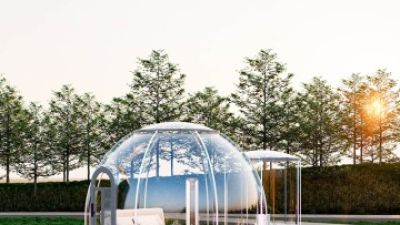
The market opportunity for the D4.5M Glamping PC Bubble Dome reflects growing interest in outdoor stays that combine a closer connection to nature with the comfort and visual appeal of thoughtfully designed accommodation. Travelers increasingly seek distinctive experiences, while hospitality operators look for flexible ways to make campsites and nature-focused destinations more memorable. A transparent bubble-style dome can offer an immersive view of its surroundings while creating a sheltered space for rest and relaxation.
Designed with a geodesic structure, the D4.5M dome brings together durability, comfort, and a striking appearance. Its 4.5-meter format may suit a range of glamping settings, from scenic retreats to established outdoor hospitality sites, subject to local site and operating requirements. For operators, its distinctive design can help create a recognizable guest experience; for visitors, it offers an inviting setting that makes the surrounding landscape part of the stay.
As outdoor accommodation continues to diversify, products that balance practical construction with a memorable guest experience may appeal to both new and established operators. The D4.5M Glamping PC Bubble Dome offers a distinctive option for those seeking to develop nature-inspired stays and make better use of attractive outdoor locations.
They design and produce transparent shelters, including inflatable domes, framed units, and modular lodging structures.
Review material thickness, seams, ventilation, anchoring, drainage, installation support, and replacement parts. Photos are not enough.
It measures tensile strength and elongation in thin plastic sheets. Compare samples of the same thickness and direction.
No. Flexibility can help during folding, but excessive stretching may loosen panels or distort their appearance.
No. Weak seams, sharp hardware, wind, and temperature changes can still cause failures. The test has limits.
Ask for the full NFPA 701 test report, with the exact material, thickness, seams, laboratory, and test date identified.
No. Local authorities may also review exits, occupancy, ventilation, wiring, heaters, and emergency access.
It may exclude transport, foundations, or site labor. Ask for an itemized price.
Check that the delivered material matches the tested sample. Read labels and maintenance instructions, too.
Long-term field data remains limited. Installed examples help, but they do not settle every durability question.
This article explores the global market for Clear Plastic Dome Tent manufacturers and explains how to compare suppliers using practical, evidence-based criteria. It considers production capacity, export experience, regional reach, and the ability to customize dimensions, layouts, and materials. It also outlines how PVC and TPU films can be evaluated through ASTM D882 tensile-strength testing, while UV durability may be assessed using ISO 4892-2 and ASTM G155 exposure methods. These tests help buyers ask more precise questions about material performance, without treating laboratory results as a substitute for project-specific evaluation.
The manufacturer profiles are organized by region, product range, and verifiable capabilities rather than promotional claims. The comparison also highlights fire-safety documentation relevant to NFPA 701 and applicable local codes, along with warranty terms, installation support, and documented project experience. Together, these factors provide a structured starting point for identifying suppliers whose materials, services, and technical evidence align with a project’s requirements.