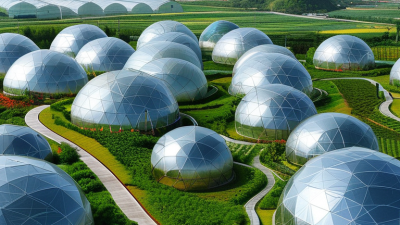
| Material composition |
Engineering-grade polycarbonate is a lightweight thermoplastic commonly used where impact resistance and weatherability are required. |
The lower weight can simplify handling and reduce the need for heavy lifting equipment, subject to the project design. |
Request the resin grade, additives, compliance documents, and material test reports before approving a supplier. |
| Installation time |
A pre-engineered dome kit can often be assembled faster than a site-built structure, although the actual duration depends on size, access, foundation work, and weather. |
Use a level base, approved fasteners, correctly sized washers, and allowance for thermal movement. Follow the supplier’s installation drawings. |
Confirm whether drawings, hardware, replacement panels, and multilingual instructions are included in the shipment. |
| Weight and handling |
Polycarbonate is generally lighter than glass of comparable thickness, helping reduce handling effort and structural dead load. |
Panels should be protected from scratches, excessive bending, and contamination during unpacking and installation. |
Compare packed dimensions, gross weight, pallet requirements, and container utilization rather than unit price alone. |
| Impact resistance |
Polycarbonate generally offers substantially higher impact resistance than ordinary glass, making it useful in exposed or high-traffic environments. |
Inspect panels after severe weather and replace components showing deep cracks, punctures, or failed seals. |
Ask for impact-test standards, test conditions, and documentation applicable to the intended market. |
| UV and weather protection |
Outdoor-grade sheets commonly use a UV-protective layer or coating to slow yellowing and loss of mechanical performance. |
Install the UV-protected face toward the exterior when the product has a designated outdoor side. Avoid abrasive cleaners. |
Verify UV-layer location, warranty terms, accelerated-weathering data, and regional climate suitability. |
| Cleaning requirements |
Routine cleaning normally requires clean water, mild soap, and a soft cloth or sponge. |
A practical schedule is visual inspection after major storms and cleaning when dirt or biological growth affects appearance or light transmission. |
Include approved cleaning instructions in the operating manual and confirm chemical compatibility for local maintenance products. |
| Thermal movement |
Polycarbonate expands and contracts more than many rigid construction materials as temperature changes. |
Use the manufacturer’s expansion clearances, slotted fixing details, compatible gaskets, and correct screw-tightening procedures. |
Check that the design has been reviewed for the destination country’s temperature range, wind exposure, and installation practice. |
| Expected service life |
Service life varies significantly with resin quality, UV protection, thickness, loading, climate, cleaning, and installation. Outdoor applications may commonly be designed for 10–20 years or more. |
A documented inspection and replacement plan helps extend usable life and reduce unexpected downtime. |
Treat service-life figures as project-specific; request warranty exclusions, exposure assumptions, and test evidence. |
| Repairability |
Individual panels, seals, caps, and fasteners can often be replaced without dismantling the entire dome if the system is modular. |
Keep an inventory of critical spare parts and record panel positions to support faster repairs. |
Confirm spare-part availability, tooling requirements, minimum order quantities, and support after the initial purchase. |
| Long-term cost factors |
Total cost includes purchase price, freight, customs, foundation, installation labor, cleaning, inspection, repairs, and eventual replacement. |
Preventive maintenance and correct installation can reduce avoidable cracking, leakage, discoloration, and premature replacement. |
Compare suppliers using total landed cost and lifecycle cost rather than quoted ex-works price only. |
| Quality verification |
Relevant checks may include dimensions, thickness, optical appearance, impact performance, UV protection, flame behavior, and load design. |
Inspect samples and critical dimensions before mass production or shipment. |
Use an agreed inspection plan, batch traceability, independent testing where appropriate, and clear acceptance criteria. |
| Sustainability and end-of-life |
Long service life can reduce replacement frequency. Polycarbonate is technically recyclable, but collection and recycling options depend on local infrastructure and contamination levels. |
Separate panels from incompatible materials where practical and follow local waste-management requirements. |
Ask for material identification, recycled-content information, take-back options, and destination-country recycling guidance. |
 +86 159 8678 2622(WhatsApp)

 Project