Why Choose a Polycarbonate Dome for Global Sourcing?
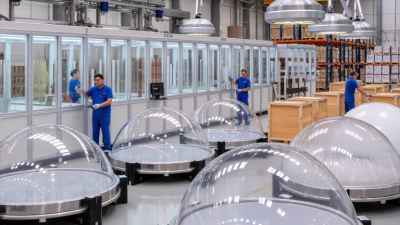
Deciding on where to source your materials globally isn’t just about chasing the lowest price per unit. Take, for example, a Polycarbonate Dome. It’s pretty versatile—it offers good impact resistance, clear optical quality, and isn’t too heavy, which makes it a popular choice for skylights, security covers, architectural features, and protective enclosures. But here’s the catch: how it actually performs depends on a bunch of factors like the resin grade, wall thickness, whether it has UV protection, the tooling used, and how well it's installed.
According to Grand View Research, the global polycarbonate market hit around USD 16.7 billion in 2023, and they’re betting it’ll keep growing through 2030. Why? Construction, automotive, electronics, and eco-friendly design are all pushing demand. MarketsandMarkets also highlights how lightweight performance and material versatility are major drivers. But don’t get me wrong—these numbers are promising, not a guarantee. Things like regional pricing, shipping costs, energy consumption, and what capacity suppliers have can change pretty fast.
Then there’s Markus Steilemann, the former CEO of Covestro, who famously said, “Circularity is not an option; it is a must.” It’s a good reminder, especially when you’re choosing a supplier for your Polycarbonate Dome. You want to ask for detailed info—resin traceability, UV-test results, impact resistance data, dimensional tolerances, and clear records of quality procedures. Getting third-party testing involved can really boost your confidence. Plus, doing factory audits can uncover issues like inconsistent molding, weak packaging, or vague warranty terms, which could save you headaches later.
Here’s the thing; just because a product is made from polycarbonate doesn’t automatically make it sustainable. You really need to think it through. The overall footprint depends on how it’s produced, transported, finished (like coatings), and how it’s handled at the end of its life. When you’re sourcing responsibly, it’s about looking at the whole lifespan—not just the initial price tag. Also, consider if the supplier can provide replacement panels, recycled options, and solid tech support. When it comes to big, global projects, the smartest move is usually choosing a supplier with verified performance, transparent communication, and reliable after-sales support. Cutting costs upfront might seem attractive, but it can end up costing much more down the line if things go wrong.
Read more »