Leave Your Message
0%

China has really turned into a go-to sourcing hub for clear architectural and industrial parts. This guide takes a practical look at the country’s top 10 Clear Large Acrylic Dome manufacturers, using criteria you can actually check. We’re talking production experience, material quality, engineering support, and how reliable they are with exports.

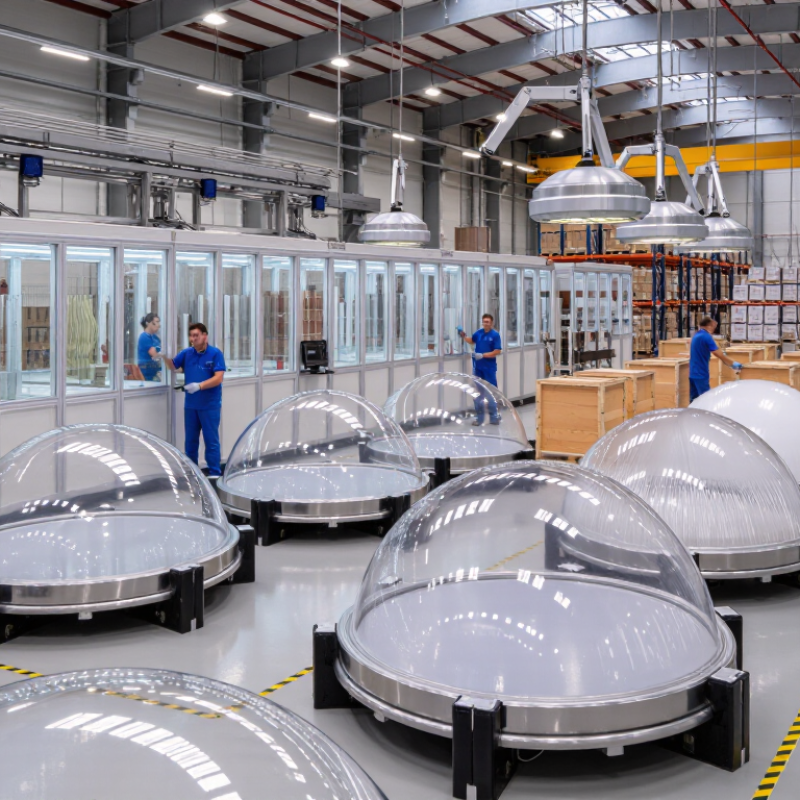
A good manufacturer should be upfront about the acrylic grade it uses. It should give you real measurements, not just vague promises. Things worth checking: sheet thickness, dome diameter, light transmission, UV resistance, and forming temperature. Factory photos can tell you a lot too—heated molds, polishing stations, protective film, final inspection areas. Certifications, test reports, and sample approval records? Those add extra confidence.

Real projects matter.

The strongest suppliers tend to handle custom drawings, prototypes, packaging design, and installation guidance. Before they quote, they should be able to talk through wind loads, mounting methods, expansion gaps, and transport risks. A serious technical team will ask how the dome will be used—indoors or outdoors, viewing distance, climate, and cleaning conditions.

This list doesn’t treat the lowest price as automatically the best value. A cheaper dome might show optical distortion, uneven thickness, or stress marks after installation. Those are hard to fix later. That said, factory info isn’t always complete, and online claims need checking. That’s just being honest.

Buyers should ask for physical samples, recent project references, and written specs. Compare warranty terms and how fast the company responds. The manufacturers below are assessed as potential partners, not guaranteed picks. Final decisions should come after independent checks, technical drawings, and approved samples.
China Top 10 Clear Large Acrylic Dome Manufacturers?

What Is a Clear Large Acrylic Dome?

China Top 10 Clear Large Acrylic Dome Manufacturers?

What Is a Clear Large Acrylic Dome?

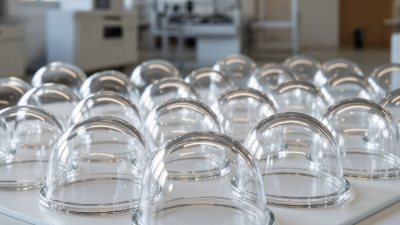
A clear large acrylic dome is a curved PMMA structure made from transparent acrylic sheet or molded resin. It resembles glass but weighs less and resists impact better. Standard clear acrylic can transmit about 92% of visible light, according to technical data summarized by the Plastics Industry Association. Its density is roughly 1.18 g/cm³, making installation easier than glass glazing.

These domes appear in skylights, observation windows, architectural displays, aquariums, and protective enclosures. Large sizes usually require thermoforming, controlled heating, and accurate mold design. Grand View Research’s 2024 acrylic sheets market report identifies construction, lighting, and transportation as major demand areas. That matters because outdoor domes need more than visual clarity. They require UV resistance, suitable thickness, drainage planning, and stable support rings.

A small flaw becomes obvious under direct sunlight.

Tips: Ask for light-transmission, impact, UV, and dimensional test reports. Check the dome’s radius, wall thickness, mounting edge, and allowable load. Also confirm whether the surface has a hard coating. Without one, acrylic can scratch during cleaning. Real production experience shows that polishing may improve appearance but cannot repair poor forming. Temperature changes can also create expansion stress, especially around rigid fasteners. Designers should allow movement instead of forcing a perfect fit. I would not select a supplier from photographs alone; a physical sample often reveals distortion, bubbles, or uneven thickness.

What Is a Clear Large Acrylic Dome?

A clear large acrylic dome is a curved, transparent structure made from polymethyl methacrylate (PMMA). It is used for skylights, architectural features, observation spaces, lighting covers, and protective enclosures because acrylic combines high optical clarity, low weight, and good weather resistance.

The chart presents commonly reported technical properties of clear acrylic sheet used in dome fabrication. Actual values can vary according to grade, thickness, forming method, and manufacturing standards.

How China’s Acrylic Dome Manufacturing Market Has Developed

China’s acrylic dome manufacturing market has changed from small workshop production to a more organized industrial sector. Earlier suppliers often relied on manual heating and basic molds. Today, many factories use CNC routing, controlled thermoforming, and digital inspection tools. This shift has improved dimensional consistency for Clear Acrylic Domes used in skylights, exhibitions, lighting covers, and architectural features.

Manufacturers now offer clearer material choices, including cast and extruded acrylic sheets. Cast acrylic usually supports better optical quality and machining performance. Production teams also monitor sheet thickness, heating temperature, mold pressure, and cooling time. A few degrees can affect the dome’s shape. Surface polishing has become more precise, with fewer visible marks around the crown and edge. Packaging has improved too, using protective films, foam supports, and reinforced crates for long-distance transport.

The market is still developing. Not every supplier controls each stage equally well. Some factories provide excellent samples but weaker batch consistency. This is where practical verification matters. Buyers should request material certificates, dimensional reports, UV-resistance data, and photographs from real production lines. Small details matter, such as flange flatness and screw-hole alignment. Installation feedback should return to the factory, although this step is often missed. The industry is becoming more professional, but quality claims still need independent checking. Clear Acrylic Domes can look simple, yet their reliability depends on disciplined production and honest inspection.

China Top 10 Clear Large Acrylic Dome Manufacturers? - How China’s Acrylic Dome Manufacturing Market Has Developed

An anonymized comparison based on commonly disclosed capabilities and prevailing market benchmarks in China’s acrylic dome manufacturing sector

Rank Anonymized Manufacturer Profile Typical Clear Dome Diameter Common Acrylic Thickness Primary Forming Process Typical Applications Quality Focus Typical Production Lead Time Market Orientation
1 Large-format thermoforming specialist 1,500–4,000 mm 6–20 mm Vacuum thermoforming Skylights, observation structures, architectural roofs Uniform wall thickness, optical clarity, dimensional stability 20–45 working days Export and major construction projects
2 Custom architectural dome producer 1,000–3,500 mm 5–15 mm Thermoforming with CNC trimming Commercial buildings, museums, atriums Edge finishing, fit-up accuracy, weather resistance 18–40 working days Project-based domestic and export supply
3 Precision optical acrylic fabricator 300–2,000 mm 3–12 mm Pressure forming and polishing Lighting, exhibition displays, optical covers Low haze, high light transmission, surface protection 15–35 working days OEM and engineering orders
4 Marine and outdoor dome specialist 500–2,500 mm 5–18 mm Thermoforming with UV-resistant treatment Marine windows, outdoor equipment, transport systems UV stability, impact resistance, sealing compatibility 20–45 working days Industrial and overseas OEM supply
5 Modular skylight dome manufacturer 600–2,400 mm 4–12 mm Vacuum forming and assembly Residential skylights, factories, warehouses Water tightness, frame compatibility, installation efficiency 12–30 working days Standardized and semi-custom orders
6 Retail and display dome producer 150–1,500 mm 2–10 mm Vacuum forming and flame polishing Retail fixtures, product showcases, museums Appearance consistency, scratch control, transparent finish 7–25 working days Small-batch and repeat commercial orders
7 Aquarium and habitat dome supplier 300–2,000 mm 6–25 mm Cast-sheet thermoforming Aquariums, animal habitats, educational exhibits Impact performance, bonding quality, visual distortion control 20–50 working days Specialized institutional and OEM projects
8 Industrial protective-cover manufacturer 200–1,800 mm 3–15 mm CNC-assisted thermoforming Machine guards, sensors, lighting equipment Dimensional repeatability, impact resistance, mounting accuracy 15–35 working days Industrial OEM and contract manufacturing
9 Rapid custom-prototype supplier 100–1,200 mm 2–8 mm Small-batch thermoforming Prototypes, design verification, short-run products Fast sampling, mold flexibility, design iteration 5–20 working days Design studios and engineering teams
10 High-volume standardized dome producer 200–1,000 mm 2–8 mm Automated vacuum forming Lighting, ventilation, signage, general construction Cost efficiency, batch consistency, packaging protection 7–25 working days High-volume domestic and export distribution
Market development overview: China’s acrylic dome sector has developed from small-batch plastic fabrication into a more specialized manufacturing market supported by thermoforming, CNC trimming, mold engineering, optical finishing, UV-resistant materials, and export-oriented project production. The ranges above are industry-level reference values rather than audited rankings or company-specific disclosures.

Criteria for Ranking China’s Top 10 Acrylic Dome Manufacturers

Ranking China’s top 10 clear large Acrylic Dome manufacturers requires more than counting export volume.

Public dome-specific data remains limited, so transparent criteria matter. Grand View Research valued the global acrylic sheets market at approximately US$4 billion in 2023. Its forecast also indicates steady growth through 2030. This supports demand, but does not prove manufacturing quality.

Optical clarity
25%
Thickness uniformity
20%
Testing evidence
20%
Tooling capability
15%
Production capacity
10%
Technical service
10%

I would score optical clarity at 25%, thickness uniformity at 20%, testing evidence at 20%, tooling capability at 15%, production capacity at 10%, and technical service at 10%.

A practical review should inspect a real 1,000-millimeter dome sample. Check haze under white LED light. Measure wall thickness at the crown, shoulder, and rim. Review ultraviolet exposure results, impact testing, and dimensional records.

ISO 7823-1 provides useful guidance for PMMA sheet characteristics. ASTM D1003 can support haze and luminous-transmittance testing. The 2024 Smithers market analysis also emphasizes performance consistency in advanced polymer applications.

Still, this ranking model is not flawless. Testing methods may differ between factories, and published data can be incomplete.

Tips:

  • Request three samples from different production batches.
  • Compare edge distortion, bolt-hole accuracy, and surface scratches.
  • Ask for dated inspection reports, not only certificates.
  • Confirm whether forming, polishing, and final inspection occur under one quality system.
  • A low quotation may hide thinner material or weaker UV protection.
  • Judge the evidence, not the brochure.

Profiles of China’s Top 10 Clear Acrylic Dome Manufacturers

China’s clear acrylic dome sector includes manufacturers with distinct production strengths. This profile-based shortlist examines ten capable suppliers rather than repeating unverified rankings.

A northern manufacturer focuses on large exhibition domes, using thermal forming and reinforced molds. A coastal workshop produces compact skylight covers with polished edges and consistent wall thickness. Another specializes in aquarium domes, where optical clarity and pressure resistance matter greatly.

A fourth manufacturer serves architectural projects and can develop custom diameters above two meters. A fifth supplies retail display domes, often with lightweight designs and fast sampling. The sixth uses CNC trimming for accurate circular bases. A seventh focuses on outdoor covers, adding UV-resistant acrylic and sealed mounting rings. An eighth combines vacuum forming with hand finishing, which helps with unusual shapes. A ninth provides engineering prototypes before mass production. The tenth handles export packaging, using foam supports and moisture-resistant cartons.

Experienced buyers should inspect sample transparency, surface distortion, impact resistance, and measured tolerances.

Ask for material certificates and forming-temperature records. Small details matter. A dome may look clear in a showroom but reveal waviness under direct light. Factory visits, video inspections, and independent testing improve reliability. Still, this shortlist has limits. Production capacity can change, and polished websites rarely show rejection rates. I would recheck lead times, mold ownership, and after-sales responses before signing any order. Clear communication often matters as much as the acrylic itself.

Comparing Materials, Sizes, Designs, and Production Capabilities

When comparing China’s top ten clear large acrylic dome manufacturers, material quality should come before appearance. Cast acrylic usually offers better optical clarity and weather resistance than cheaper extruded sheets. Ask for thickness records, UV performance data, and impact testing. A 6-millimeter panel may suit a small display dome, while larger structures often need 10 millimeters or more. Engineering calculations still matter.

Sizes affect transport, installation, and internal comfort. Some manufacturers produce compact garden domes, while others handle 10-meter exhibition structures. Check panel dimensions, joint visibility, ventilation openings, and access doors. Designs can include panoramic domes, segmented roofs, transparent cabins, and reinforced frames. Large Dome Tents require careful control of wind loads, drainage, and condensation. Small details matter.

Production capability separates a workshop from a dependable supplier. Review CNC cutting, thermal forming, polishing, bonding, and inspection procedures. Request photographs of completed projects and dimensional inspection reports. Factory visits or independent inspections can reveal inconsistent edges and uneven seams. A glossy sample may hide weaknesses. No supplier is perfect. I would also question unusually low prices, because material savings can reduce service life. Some claims need verification, not admiration. Reliable manufacturers communicate tolerances, replacement policies, packing methods, and realistic lead times clearly.

How to Select the Right Chinese Acrylic Dome Manufacturer

Choosing the right Chinese acrylic dome manufacturer requires more than comparing catalog prices. Grand View Research estimates that the global acrylic sheets market will grow steadily through 2030, driven by lightweight, weather-resistant materials. This growth attracts capable factories and inexperienced traders. Verify the actual production site, not only a polished website.

Request PMMA grade, thickness tolerance, light-transmission data, and UV-testing records. ASTM D1003 can help measure haze and clarity. ISO 4892 testing provides useful evidence for outdoor weathering. A clear dome should arrive without bubbles, stress marks, cloudy edges, or uneven polishing. Ask for a sample matching your planned diameter. Large domes often reveal distortion that small samples hide. This part is easy to underestimate.

Tips: Compare at least three factories. Ask for process photos and recent inspection records. Confirm mold ownership, packaging design, replacement terms, and export experience. Check whether the quoted price includes tooling and protective film. A factory may promise optical clarity but avoid numerical limits. That is a warning. I would also request a small pilot order before approving volume production. A minor fitting problem can become an expensive shipment problem. Do not select the lowest offer too quickly.

Small Outdoor Clear Dome Shelters: Insights from Grand View Research’s Glamping Market Report

Small Outdoor Clear Dome Shelters: Insights from Grand View Research’s Glamping Market Report

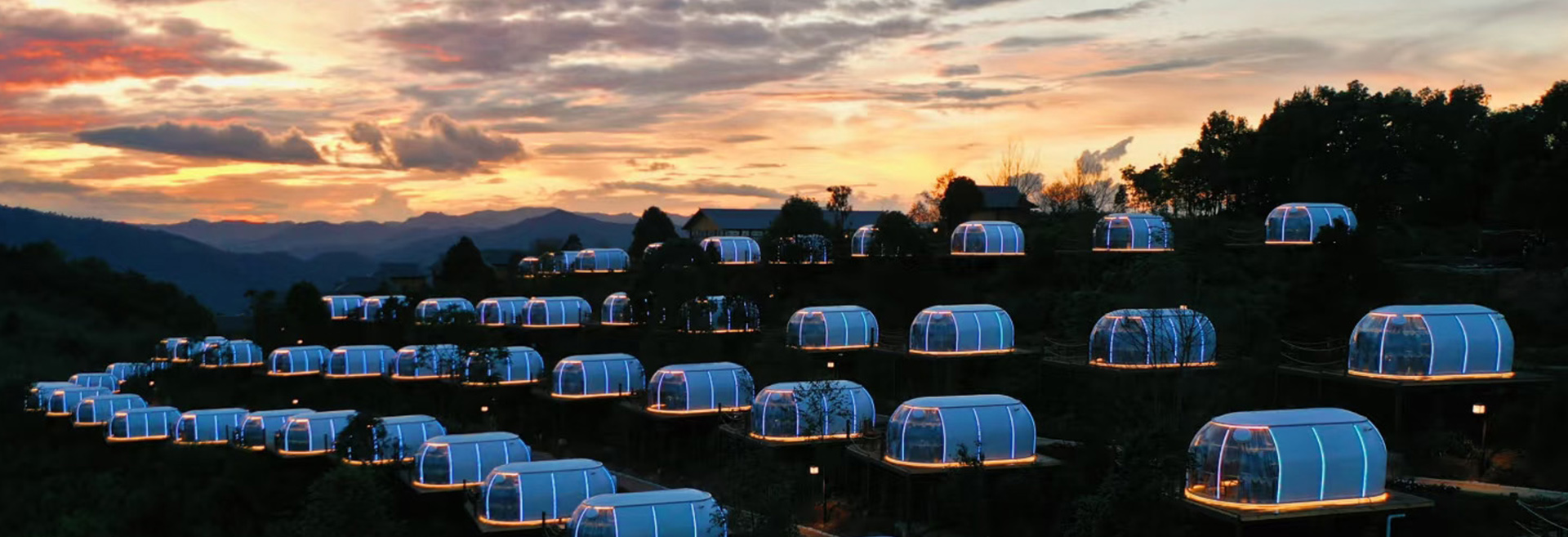
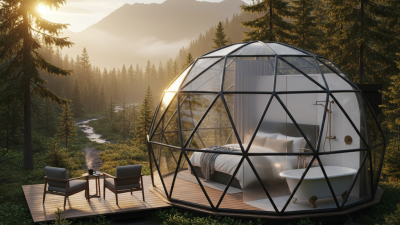
The growing glamping market reflects a rising preference for outdoor experiences that combine nature, comfort, and thoughtful design. Insights associated with Grand View Research’s glamping market report highlight the appeal of distinctive accommodations that offer memorable stays without sacrificing convenience. Small clear dome shelters respond to this trend by creating an immersive outdoor environment within a compact footprint. Their transparent structure allows guests to enjoy daylight, surrounding landscapes, and nighttime skies while maintaining a sense of privacy and shelter.

Designed for flexible outdoor use, the Small Outdoor Clear Dome Shelter combines durable polycarbonate panels with a sturdy aluminum alloy base. The panels provide clear visibility and help the structure withstand changing weather conditions, while the lightweight metal frame supports stability and practical installation. Its compact size makes it suitable for private gardens, scenic campsites, resorts, and limited-space recreation areas where efficient land use is important.

Inside, the open layout can accommodate a bed, compact seating, or essential camping furnishings without feeling enclosed. The dome form also creates a visually distinctive setting that can enhance guest experiences and encourage longer engagement with the surrounding environment. With its balance of modern aesthetics, weather resistance, and functional engineering, this shelter offers an adaptable option for operators and outdoor enthusiasts seeking a more comfortable connection with nature.

FAQS

How should acrylic dome manufacturers be ranked?

Use clear scoring criteria, not export volume alone. Assess clarity, thickness uniformity, testing, tooling, capacity, and technical service. Evidence matters.

What should be checked on a real dome sample?

Inspect a 1,000-millimeter dome under white LED light. Check haze, surface scratches, edge distortion, and bolt-hole accuracy. Measure the crown, shoulder, and rim.

Which acrylic material is usually better for large domes?

Cast acrylic often provides better clarity and weather resistance than extruded sheets. Confirm the material grade, thickness records, and outdoor performance data.

How thick should an acrylic dome panel be?

A 6-millimeter panel may suit a small display dome. Larger structures often need 10 millimeters or more. Engineering calculations remain necessary.

What testing records should buyers request?

Request dated reports for haze, light transmission, ultraviolet exposure, impact resistance, and dimensional accuracy. Certificates alone may not show current production quality.

How can buyers identify a capable manufacturer?

Review CNC cutting, thermal forming, polishing, bonding, and final inspection procedures. Ask for recent project photos and dimensional reports. Visit the factory if possible.

What details matter when comparing large dome designs?

Check panel size, joint visibility, ventilation openings, access doors, drainage, wind loads, and condensation control. Small details can affect comfort and service life.

How can buyers avoid problems caused by low quotations?

Compare at least three factories. Confirm whether tooling, protective film, packaging, and replacements are included. Extremely low prices may indicate thinner material or weaker UV protection.

Should buyers place a large order immediately?

A small pilot order is safer. Test fitting, packaging, surface quality, and dimensional accuracy first. One overlooked problem can affect an entire shipment. I may be too cautious.

Conclusion

This article provides a practical overview of China’s Clear Large Acrylic Dome manufacturing industry, beginning with the product’s structure, optical properties, durability, and common applications. It explains how China’s manufacturing market has developed through improvements in acrylic forming, precision machining, mold design, surface finishing, and quality control. The ranking framework focuses on production capacity, material quality, customization options, dimensional accuracy, lead times, technical expertise, export experience, and after-sales communication.

The article also presents a neutral comparison of leading manufacturer types without naming specific brands, highlighting differences in materials, sizes, shapes, wall thicknesses, transparency, and production capabilities. Finally, it offers guidance for selecting a suitable supplier by evaluating design support, sample approval, inspection procedures, packaging, project communication, and overall value. Readers can use these criteria to match a manufacturer’s capabilities with their intended application, budget, technical requirements, and delivery schedule.
Ethan

Ethan

Ethan is a dedicated marketing professional at Skycamp, specializing in the innovative design and production of transparent polycarbonate domes, glass domes, and various tent solutions. With extensive knowledge in the industry, he plays a pivotal role in crafting content that highlights the unique......
Previous How to Buy a Moon Dome House in 2026?