Leave Your Message
0%

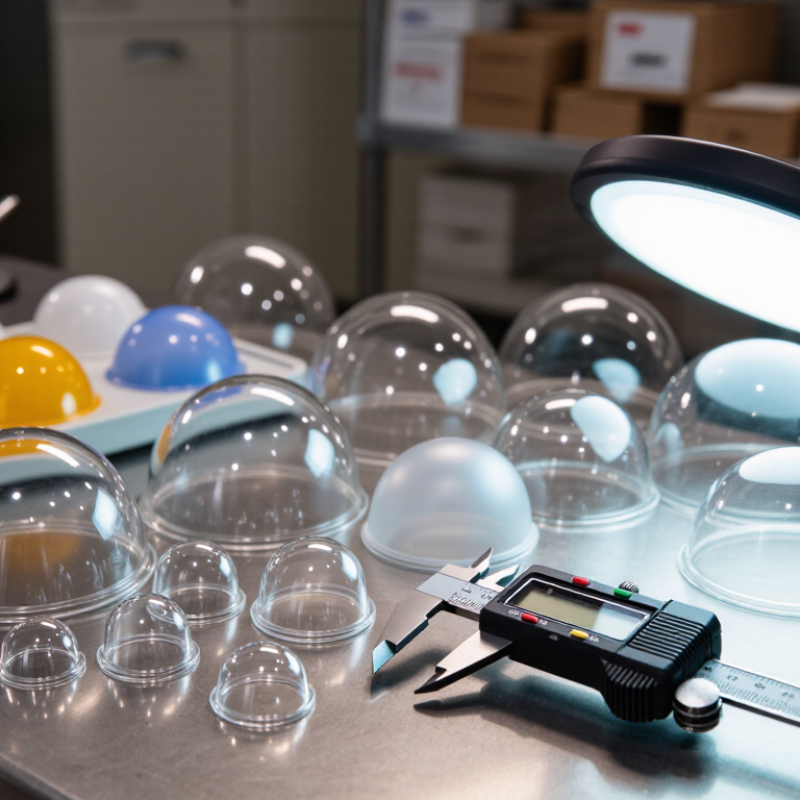
Picking 3M Domes for your global sourcing in 2026 isn’t just about comparing prices per unit. Sure, a dome might look flawless under showroom lights, but that doesn’t mean it’ll hold up after UV exposure, repeated cleaning, or long-distance shipping. When you're evaluating these, your procurement team should dig into details like optical clarity, impact resistance, how well it bonds with adhesives, surface finish, and tolerance levels. Even tiny details matter—a mismatch of just 0.3 millimeters can slow down assembly or cause other headaches.

Dr. Elena Marquez, a pro in polymer sourcing, puts it simply: “A dome is truly ready for the global market only when it can survive the entire supply chain.” This isn’t just theory—buyers should ask for detailed material specs, samples from production, inspection reports, and packing info before placing big orders. For 3M Domes, make sure to clarify whether you need polycarbonate, acrylic, or another engineered plastic. Pc Domes are known for good strength, but their real performance still depends on factors like thickness, molding conditions, and coating quality.

And looking ahead to 2026, the game favors suppliers who have stable production capacities and clear, transparent communication. Questions like who owns the tooling, minimum order requirements, lead times, export packaging, and backup plans are all fair game. It's a smart move to test sample parts under actual conditions—expose them to sunlight, moisture, vibrations, and cleaning chemicals. Keep track of how they hold up. Sadly, that step often gets skipped, but it can save you from surprises later.

Not every supplier will have perfect data to share. That’s not an automatic reason to write them off—it’s just a warning sign. Some factories communicate well but lack fancy testing gear, while others make great parts but are slow to respond. The key is to find a balance: weigh the evidence, responsiveness, costs, and who you can count on long-term. The cheapest isn’t always the best choice—in fact, it rarely is. The ideal partner will consistently deliver quality no matter where you’re sourcing from.
How to Choose 3M Domes for Global Sourcing in 2026?

Define the Types and Functions of 3M Domes

How to Choose Three-Dimensional Domes for Global Sourcing in 2026?

Define the Types and Functions of Three-Dimensional Domes

Three-dimensional domes are raised protective labels used on equipment, packaging, and control panels. Clear polyurethane domes suit outdoor products because they resist moisture, abrasion, and moderate ultraviolet exposure. Epoxy domes create a harder, glass-like surface, but they may become brittle in cold conditions. Soft-touch resin domes provide better grip and a noticeable tactile effect.

Function matters more than appearance. A dome can protect printed graphics, improve product identification, and add depth to a flat surface. Grand View Research valued the global pressure-sensitive adhesives market at approximately USD 63 billion in 2023. Its report forecasts steady growth through 2030. Smithers’ 2024 label-industry research also highlights durability and premium finishes as important purchasing factors. These findings support testing adhesive performance, not only comparing prices.

Tips: Ask suppliers for peel-adhesion results, resin hardness, UV-aging data, and temperature ranges. Test the dome on your real substrate. Plastic, coated metal, and textured surfaces behave differently. Use ASTM D3330 for peel testing and ISO 4892-3 for accelerated weathering. A sample may look perfect after one week, yet fail after repeated heat and humidity cycles. That is an uncomfortable detail, but global sourcing rewards evidence over assumptions.

Identify Application, Material, and Performance Requirements

How to Choose 3m Domes for Global Sourcing in 2026?

Choosing 3m Domes starts with the application, not the catalogue image. Define whether the dome protects sensors, lighting, cameras, or outdoor instruments. A coastal enclosure faces salt spray, wind, and ultraviolet exposure. An indoor optical cover may need low haze and accurate light transmission. Fortune Business Insights estimates the global polycarbonate market at about USD 17 billion in 2023. Its forecast also shows strong growth through 2032. This suggests wider material availability, but not identical quality between suppliers.

Material selection should match measurable performance. Polycarbonate offers impact resistance and low weight. Acrylic can provide excellent optical clarity and weather stability. Glass performs well against scratching, but adds weight and breakage concerns. Ask suppliers for test results, not broad claims. ASTM D1003 measures haze and luminous transmittance. ISO 4892-3 evaluates accelerated UV exposure. For outdoor sourcing, also request thermal cycling, salt-spray, chemical-resistance, and dimensional-tolerance data. A perfect specification rarely exists. Real environments expose weak assumptions.

Tips: Write a one-page requirement sheet before requesting quotations. Include diameter, wall thickness, mounting method, operating temperature, optical limits, and expected service life. Request samples from at least two production lots. Inspect seams, bubbles, distortion, and edge finish under strong side lighting. Confirm packaging with drop-test evidence. Small details matter. Also, review regional standards and import requirements early; a technically suitable dome may still fail local installation rules.

How to Choose 3M Domes for Global Sourcing in 2026? - Identify Application, Material, and Performance Requirements

Application Category Typical Use Case Recommended Dome Construction Common Material Options Key Performance Requirements Typical Design Targets Environmental Considerations Global Sourcing Checkpoints Requirement Priority
Decorative and Identification Labels Raised logos, control-panel labels, equipment identification, and premium product graphics. Low-profile clear or tinted dome over a printed label substrate. Polyurethane resin Polyester film Acrylic adhesive Optical clarity, color stability, abrasion resistance, dimensional consistency, and clean edge definition. Typical dome height: 1–3 mm; label thickness commonly below 1 mm before doming; surface should remain free of bubbles and fisheyes. Indoor use, intermittent moisture, UV exposure depending on product location, and contact with household cleaners. Confirm artwork tolerance, color-reference method, inspection lighting, protective liner type, and packaging against dust contamination. High: appearance and adhesion
Outdoor Equipment and Industrial Controls Raised identification on electrical enclosures, machinery, tools, and outdoor instruments. Weather-resistant domed label with a durable face film and permanent pressure-sensitive adhesive. Polyurethane resin Polyester or polycarbonate film Acrylic adhesive UV resistance, water resistance, abrasion resistance, adhesion to painted metal or plastic, and resistance to oils and mild solvents. Target continuous-use range often selected around −40 to 80 °C, subject to the complete construction and substrate. Rain, condensation, freeze-thaw cycles, sunlight, dust, lubricants, and temperature cycling. Request accelerated weathering evidence, chemical-resistance testing, substrate-specific adhesion data, and outdoor packaging validation. High: weathering and adhesion
Automotive Interior Controls Decorative switches, trim identifiers, console markings, and tactile control graphics. Thin, flexible dome construction with controlled height and low glare. Polyurethane or polyester resin Polyester film Low-glare coating Low fogging, resistance to skin oils and interior cleaners, color durability, low odor, and stable adhesion over temperature changes. Design around the available panel clearance; maintain consistent height and radius across repeated parts. Interior temperatures, condensation, plasticizer migration, sunscreen, hand lotion, and cleaning chemicals. Check restricted-substance declarations, odor and fogging requirements, lot traceability, appearance standards, and vehicle-level validation needs. High: chemical and appearance stability
Consumer Electronics and Small Devices Branding areas, touch-control markings, decorative badges, and small raised indicators. Ultra-low-profile clear dome designed for precise registration and minimal interference with adjacent parts. Optically clear polyurethane Polycarbonate or polyester film High-performance acrylic adhesive High visual clarity, low haze, scratch resistance, precise die-cutting, and reliable adhesion to coated plastics or glass. Typical profile selected below surrounding mechanical features; dimensional tolerance should be defined on the drawing. Hand contact, sweat, skin oils, occasional drops, temperature changes, and cleaning wipes. Define cosmetic acceptance criteria with approved samples, verify camera inspection capability, and control liner, roll direction, and splice limits. High: cosmetics and registration
Medical and Laboratory Equipment Equipment identification, control-panel graphics, disposable-device markings, and instrument labels. Cleanable domed label using a chemically resistant face and adhesive system compatible with the device substrate. Polyurethane resin Polyester film Acrylic adhesive Resistance to disinfectants, print permanence, low particle generation, cleanability, biocompatibility assessment where applicable, and traceability. Performance must be verified against the exact disinfectant concentration, dwell time, temperature, and number of cleaning cycles. Alcohols, quaternary ammonium compounds, hydrogen peroxide solutions, humidity, and repeated wiping. Require material declarations, lot records, controlled change notification, cleanliness controls, and application-specific regulatory review. High: chemical resistance and traceability
Appliance and Durable Goods Panels Raised control icons, rating information, user-interface labels, and decorative trim. Medium-profile domed graphic with a washable surface and strong adhesion to textured or molded plastic panels. Polyurethane resin Polyester film Acrylic adhesive Water resistance, resistance to detergents and grease, abrasion resistance, print protection, and adhesion after thermal cycling. Define required peel or shear performance on the actual panel material; allow for textured-surface contact limitations. Kitchen grease, detergents, steam, humidity, vibration, and repeated user contact. Test on production-grade substrates, confirm application temperature, specify surface-cleaning instructions, and use moisture-resistant packaging. High: washability and substrate adhesion
Retail and Promotional Graphics Short- to medium-term packaging decoration, promotional badges, point-of-sale graphics, and premium gift packaging. High-clarity decorative dome optimized for appearance and economical volume conversion. Polyurethane resin Paper or polyester label stock General-purpose acrylic adhesive Gloss retention, color accuracy, clean die-cut edges, quick delivery, and consistent visual appearance. Service life and adhesion duration should match the campaign period and packaging surface. Indoor lighting, moderate humidity, handling abrasion, and exposure to cardboard coatings or packaging films. Approve a color master, confirm minimum order quantity, define roll or sheet format, and validate carton protection during international transport. Medium: appearance and cost
Tools, Sports Equipment, and Wearables Raised product identifiers, grip-area markings, equipment graphics, and decorative protective labels. Flexible, impact-resistant dome with strong bonding to coated metal, rubber, or engineered plastic. Flexible polyurethane resin Polyester film High-tack acrylic adhesive Impact resistance, sweat and oil resistance, abrasion resistance, edge lift prevention, and adhesion under repeated flexing. Match dome flexibility to the bend radius of the product; avoid sharp corners that can concentrate peel forces. Sweat, rain, dirt, vibration, impact, repeated handling, and temperature cycling. Conduct peel, rub, flex, and drop testing on final substrates; specify corner radius and surface-energy requirements. High: durability and edge security
Flexible or Curved Surfaces Curved housings, flexible cases, tubing-related identification, and products with compound surface contours. Low-modulus, thin dome with conformable adhesive and carefully controlled edge geometry. Flexible polyurethane Thin polyester film Acrylic adhesive Conformability, resistance to edge lifting, flexibility after aging, and dimensional stability during application. Define minimum bend radius and allowable dome height relative to the surface curvature. Repeated flexing, thermal expansion differences, plasticizer migration, and low-surface-energy plastics. Provide the supplier with 3D surface drawings or physical samples, and validate application pressure, dwell time, and storage conditions. High: conformability
High-Temperature Industrial Identification Labels used near engines, heaters, industrial ovens, lighting equipment, or high-temperature assemblies. Heat-rated domed construction selected for the actual continuous and peak temperature profile. Heat-resistant resin Polyester or polyimide film Heat-rated acrylic adhesive Thermal aging resistance, print stability, adhesive retention, low shrinkage, and resistance to thermal cycling. Do not rely on nominal resin ratings alone; validate the complete label construction at continuous and peak temperatures. Heat, vibration, oils, combustion by-products, humidity, and rapid temperature changes. Request test reports for the complete construction, define dwell time at temperature, and confirm storage and application temperature limits. High: thermal aging
Transparent or Backlit Applications Illuminated symbols, light-guiding graphics, transparent badges, and indicator windows. Optically clear dome with controlled haze and minimal light scattering. Optically clear polyurethane Clear polyester or polycarbonate Optically clear adhesive Haze, transmittance, bubble control, yellowing resistance, clean edges, and consistent light transmission. Specify optical properties using a defined measurement method and test geometry; appearance criteria should include viewing angle. LED heat, UV exposure, condensation, cleaning fluids, and internal component outgassing. Approve optical samples under production lighting, define bubble-size limits, and use protective packaging that prevents surface scuffing. High: optical consistency
General Indoor Identification Office equipment, storage systems, indoor machinery, fixtures, and low-exposure product markings. Standard domed label selected primarily for appearance, clean handling, and economical production. Polyurethane resin Paper or polyester film General-purpose acrylic adhesive Readable print, stable adhesion, clean die-cutting, basic scratch resistance, and consistent color. Design dimensions and thickness according to available clearance and required visual prominence. Normal indoor temperature and humidity with limited exposure to water and chemicals. Confirm artwork file standards, minimum order quantities, production lead time, sample approval process, and replacement-part availability. Medium: cost and appearance
Selection guidance is application-based. Final material, adhesive, thickness, temperature range, chemical resistance, optical performance, and service life should be verified using the complete dome construction on the intended substrate and under the actual environmental conditions.

Compare Authorized 3M Products with Compatible Alternatives

For global sourcing in 2026, choosing industrial domes means comparing authorized products with compatible alternatives, not simply matching a catalog photo. An authorized item normally offers documented specifications, lot traceability, controlled manufacturing, and defined warranty support. Ask for evidence. Request material data, dimensional tolerances, adhesive details, storage limits, and test reports. A supplier should explain where the dome is made and how changes are communicated. These details matter when shipments cross climates and production sites.

Compatible alternatives can reduce cost or shorten lead times, but “compatible” is only a starting claim. Check diameter, height, wall thickness, optical clarity, surface hardness, and mounting method. Test samples under actual conditions, including heat, humidity, vibration, cleaning chemicals, and repeated installation. Fit is not enough. In one sourcing review, a dome matched the drawing but clouded after ultraviolet exposure. The oversight was ours; we tested dimensions, not service life. That mistake changed our approval checklist.

For higher-risk applications, use a controlled first article and compare performance against the approved reference. Record batch numbers, inspection results, failure limits, and corrective actions. Verify applicable product, import, labeling, and environmental requirements in each destination market. Alternatives should also provide stable capacity, technical contacts, and change-notice procedures. If documentation is vague, pause the order. A lower unit price cannot compensate for uncertain performance, replacement delays, or an audit trail that disappears.

Verify Global Standards, Certifications, and Supplier Credentials

When sourcing dome components globally in 2026, verify standards before comparing prices. The ISO Survey 2023 recorded 1,265,216 ISO 9001 certificates worldwide. That figure shows broad adoption, not automatic reliability. Ask suppliers for the certificate number, issuing body, scope, and expiry date. Confirm them through the certification body’s public database.

For Oval Domes, request drawings with tolerance limits, material grade, surface finish, and inspection methods. A supplier should provide batch records, dimensional reports, and a traceable production lot. Check whether its quality system covers molding, coating, assembly, or only office procedures. The ISO Survey 2023 also listed 596,779 ISO 14001 certificates, useful when environmental controls matter. Yet certification alone cannot verify product consistency. A sample may pass while a later batch changes.

Use an independent laboratory for polymer identification, light transmission, hardness, and environmental aging. Keep the test conditions visible, including temperature, humidity, exposure time, and measurement equipment. Supplier credentials deserve the same scrutiny. Review audited financial records, factory ownership, export history, and references from comparable markets. The World Bank’s 2023 Logistics Performance Index highlights how customs and shipment visibility differ sharply between economies. Build those delays into validation plans. I would not rely on a polished certificate scan. It is convenient, but incomplete. A missing revision code or mismatched legal entity can reveal a serious control gap.

Evaluate Pricing, Minimum Orders, Logistics, and Import Duties

When sourcing Glass Domes globally, compare landed cost rather than unit price. A low quote may exclude tooling, protective packaging, or inspection fees. Request prices at several quantities, such as 100, 500, and 2,000 pieces. Record whether the quotation includes molds, surface treatment, breakage allowances, and export documentation. I have found that small orders often carry surprisingly high setup costs. The cheapest sample was not always the cheapest production option.

Minimum order quantities affect cash flow and storage pressure. Ask whether the supplier accepts mixed sizes or phased deliveries. Confirm sample approval before committing to a large batch. A written specification should cover diameter, wall thickness, clarity, tolerance, packaging, and acceptable defects. Small scratches can become expensive disputes later. I once underestimated carton volume, and the freight bill exposed that mistake.

Logistics require practical comparison. Air freight may protect a launch schedule, while sea freight usually suits heavier volumes. Check carton dimensions, pallet limits, insurance, transit time, and delivery terms. Import duties depend on classification, customs value, origin, and local tax rules. Ask a licensed customs broker to verify the likely tariff code before ordering. Keep commercial invoices, packing lists, certificates, and payment records consistent. Duty estimates can change after inspection. That uncertainty deserves a financial buffer.

Build a Reliable Sourcing and Quality Control Process

Global sourcing for Garden Domes in 2026 requires more than comparing unit prices. A reliable process begins with clear drawings, material specifications, dimensions, surface requirements, and intended installation conditions. I recommend requesting samples from several qualified suppliers before approving production. Check edge finishing, transparency, color consistency, and fit with the mating parts. Small gaps often appear only during assembly.

Build quality control into the purchase agreement. Define inspection points before production, during molding, and before shipment. Use approved samples as physical references. Record measurements, photographs, batch numbers, and packaging conditions. Independent inspections can add confidence, especially when suppliers operate far from your team. However, documents are not proof by themselves. A polished report may still miss warping found under real assembly pressure. I have learned that simple hands-on checks often reveal more than a long spreadsheet.

Tips: Keep one sealed reference sample. Ask suppliers to explain their tolerance limits in plain language. Confirm export packaging with a drop-test or practical trial. Review production records before the final payment. Avoid changing materials or tooling without written approval.

A responsible sourcing team should also review applicable product standards, environmental requirements, and import rules in each target market. Requirements can differ between regions. Build a corrective-action process for defects, including response times, replacement terms, and root-cause evidence. The process may feel slower at first. It usually prevents expensive rework later. Review supplier performance after every shipment, because one successful order is not enough evidence of long-term reliability.

FAQS

How should I define requirements before sourcing a 3-meter dome?

Start with the application.

Which material suits different dome environments?

Polycarbonate offers low weight and strong impact resistance.

What performance data should suppliers provide?

Request measured haze, light transmission, ultraviolet resistance, thermal cycling, and chemical-resistance results.

How can I inspect samples effectively?

Request samples from at least two production lots.

How should I compare supplier quotations?

Compare landed cost, not only unit price.

What should I ask about minimum order quantities?

Ask whether mixed sizes or phased deliveries are possible.

Which shipping details deserve attention?

Compare air and sea freight according to urgency, weight, and volume.

How can I reduce import and compliance surprises?

Ask a licensed customs broker to verify the likely tariff classification.

Conclusion

Choosing 3m Domes for global sourcing in 2026 requires a structured evaluation of both technical needs and supply-chain conditions. Start by identifying the dome type, size, shape, optical or protective function, and intended application. Then define essential requirements such as material, transparency, weather resistance, temperature tolerance, flexibility, adhesion, and expected service life. Buyers should compare authorized products with compatible alternatives by reviewing specifications, consistency, testing data, and long-term performance rather than relying only on price.

A reliable sourcing decision also depends on verifying applicable international standards, certifications, manufacturing capabilities, and supplier credentials. Assess total cost, including unit pricing, minimum order quantities, packaging, transportation, insurance, customs procedures, and import duties. Before placing large orders, request samples, conduct inspections, confirm quality documentation, and establish clear acceptance criteria. A written quality-control process, production monitoring plan, traceability system, and contingency strategy can reduce defects, delays, and supply interruptions while supporting stable global procurement.
Landon

Landon

Landon is a dedicated marketing professional at Skycamp, where he excels in promoting innovative design solutions for transparent polycarbonate domes and glass structures. With a keen eye for detail and a deep understanding of thermoforming technology, he has become an invaluable asset to the......
Previous What Is a Sliding Door Dome?